A red pot, a slow Sunday
It rained all of Saturday, the kind of grey that settles in and decides to stay, so on Sunday I gave up on going anywhere and made bread instead. I had a sourdough starter going on the windowsill, fed and patient, and I'd been promising it a proper home for weeks. By mid-morning the dough was shaped and resting, and the new pot was sitting on the stove waiting to do its part.
The smell came later, when the loaf went in. That particular warm, slightly sour smell of bread baking inside cast iron, filling the kitchen and then the rest of the house. Thành was reading in the next room. He didn't say anything for a while. Then he came and stood in the doorway and asked, in his quiet way, what time it would be ready.
Why I Wanted One
For a long time I baked bread on a tray, or in whatever oven dish I had, and it was fine. The loaves came out flat-ish, pale, a little tired-looking. I knew the reason. Bread wants steam in those first minutes, and an open tray lets all of it escape. A heavy pot with a tight lid traps the steam around the dough, so the crust stays soft long enough to rise, then crackles open the way a good loaf should.
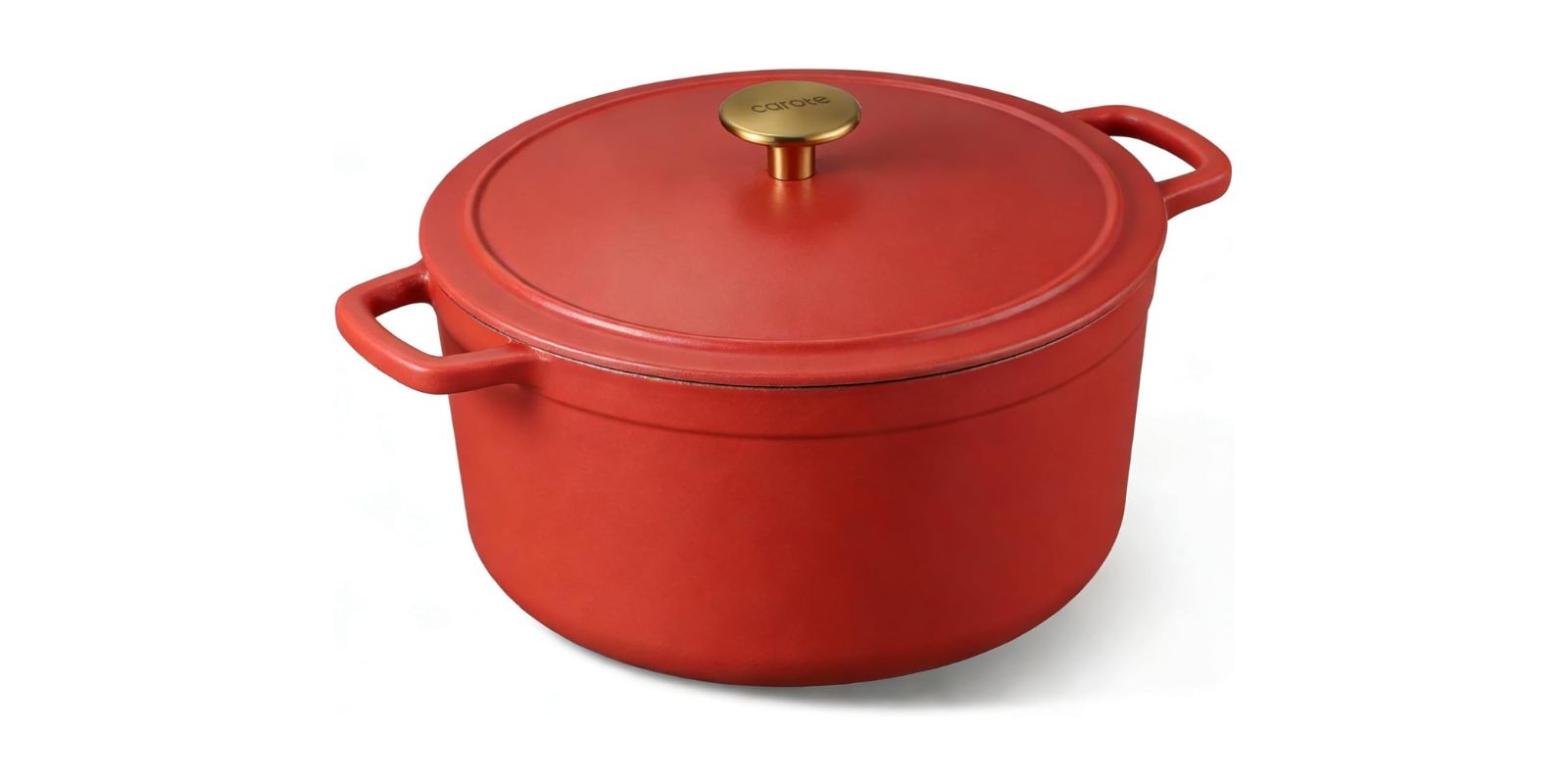
I'd been wanting one for years. I just kept not buying it, the way you do with the things you actually want. When I finally chose this CAROTE enameled cast iron Dutch oven, it was the red that decided me, honestly. A deep, glossy red that looks like it belongs in a kitchen where things get cooked.
What It Actually Is
It's a 5 quart enameled cast iron pot with a heavy domed lid and two short handles on the sides. The enamel means there's no seasoning to do, which surprised me, because I'd grown up thinking cast iron was a thing you had to coax and oil and never wash properly. This one you just wipe clean with warm soapy water. The inside has a smooth pale glaze, so you can see what's happening to a sauce, which I like more than I expected.
The lid is the clever part. The underside has little raised points that catch the steam and let it fall back onto the food instead of running down the sides. For a braise that keeps everything moist. For bread it holds the steam exactly where the loaf needs it. Five quarts feeds the four of us with enough left for Thành to take to work, and it goes on any stovetop, gas or electric or induction, and into the oven up to 500 degrees.
What I Learned, Mostly the Hard Way
This is the part I wish someone had told me plainly, so I'll tell you.
It's heavy. Properly heavy. Empty it already has real weight, and full of stew it's a two-handed, mind-where-your-fingers-are kind of lift. The side handles are short, which is sensible for fitting in the oven but means your knuckles sit close to hot metal. I keep a folded tea towel by the stove now and use it every single time. Nấm is not allowed near it when it's on the heat, and she knows, because she asked once and I said no in the voice I save for the genuinely dangerous things.
Worth knowing before you buy. The enamel is lovely but it isn't indestructible. It can chip if you knock it hard against the tap or drop a metal lid onto the rim. I use wooden and silicone spoons in it, never metal, and I set it down gently. Treat it kindly and it stays glossy. Be careless and you'll see a mark.
The other thing is heat. The pot holds warmth so well that I scorched my first batch of onions before I understood it. You start low. Medium-low for the first five or seven minutes, let it come up slowly, and only then turn it higher. And when you're done, let it cool on its own before it meets water. A hot pot under a cold tap can crack the enamel from the shock. I learned that one from reading, thankfully, and not from ruining anything.
Quick reference
| Capacity | 5 quarts, feeds 4 to 6 |
| Material | Enameled cast iron, no seasoning needed |
| Oven safe | Up to 500°F |
| Stovetops | Gas, electric, ceramic, induction |
| Care | Wipe clean, warm soapy water, cool before washing |
| Rating | Around 4.7 stars from over a thousand cooks |
Who It Suits
If you bake bread, or want to, this is the easiest way to a good crust. If you braise and stew and roast whole chickens on cold Sundays, it does all of that in one pot you can take from stove to oven to table. It is not for someone who wants something light to lift one-handed, and it asks for a little gentleness in return. But it gives a lot back.
The bread came out that Sunday with a crust that actually crackled when I cut it, dark and blistered on top, soft and open inside. We ate half of it warm at the table with butter, the four of us, while the rain kept on outside. Kẹo declared it the best bread I'd made, which he says about most bread, but this time I thought he might be right. Thành had a second slice and didn't ask about dinner for a long while.
The pot is washed and back on the shelf now, red and patient, waiting for next Sunday. I think it will be doing this for a long time.
As an Amazon Associate I earn from qualifying purchases. This comes at no extra cost to you.